

How to Organize Belts: 6 Ways That Keep Them Flat and Findable Leave a comment
How to organize belts, short answer: hang them, one per hook, by the buckle. A belt that hangs keeps its shape, stays visible, and never gets the curl and cracked edge that comes from being coiled in a drawer for years. One wooden hanger with a row of hooks on the closet rail holds every belt a man owns and the ties beside them, and it takes a minute to set up. Rolling in a divided drawer is the second-best method, for casual and woven belts. This guide covers how to organize belts six ways, which one suits which closet, how to stop leather from curling, and how many belts a man actually needs.
The short version
The one-minute belt organizer
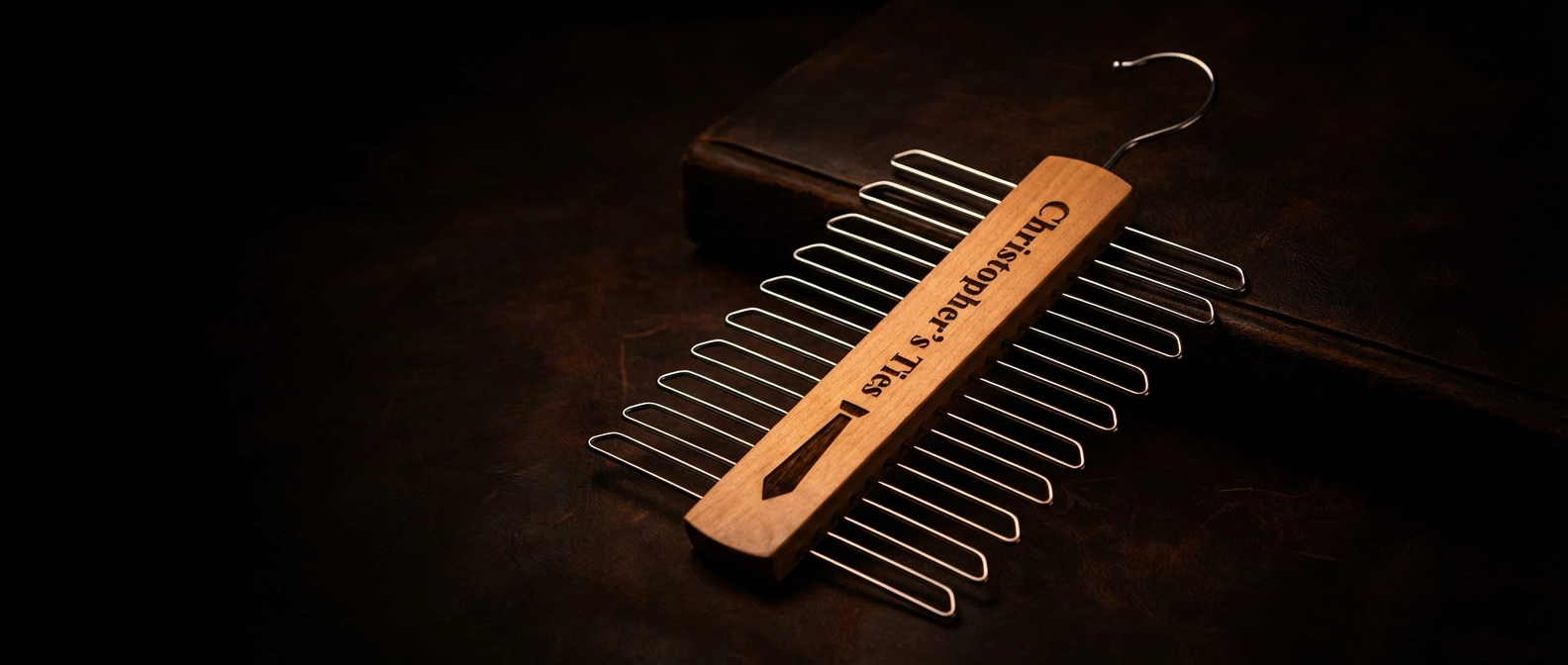
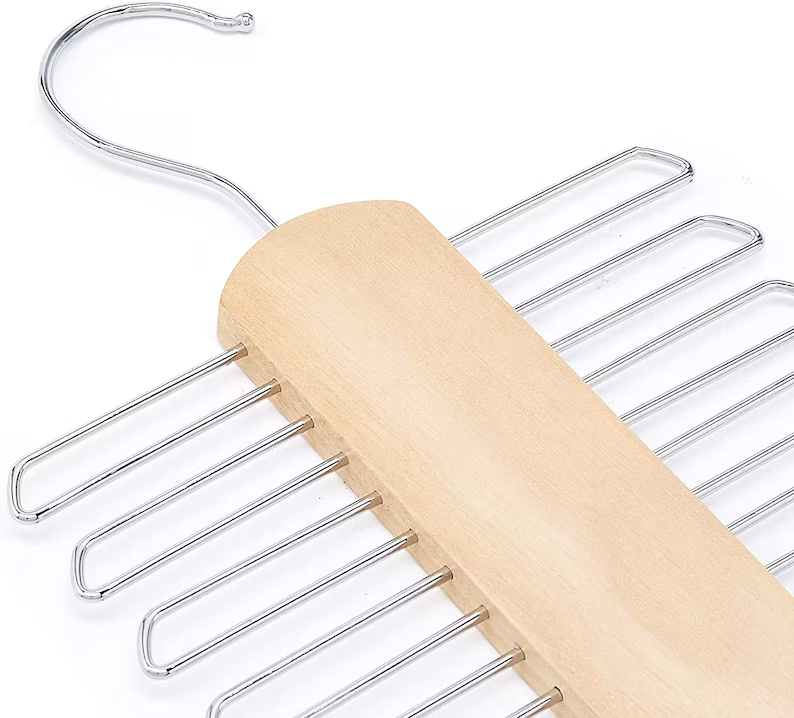
Personalized Oak Tie & Belt Hanger — 20 chrome hooks, hangs on the closet rail, engraved with a name
1. How to organize belts on a hanger: one per hook, by the buckle
This is the method that solves the problem permanently. A wooden bar with a row of hooks hangs from the closet rail like a normal hanger; each belt goes over its own hook by the buckle and hangs straight down. Gravity does the work: the leather stays flat, the holes stay round, and every belt is visible at once, so the one you wanted is not at the bottom of a pile. Hanging by the buckle matters, because the buckle end is the heavy, stiff end and the tip is the thin, soft one; hang a belt by the tip and it stretches the last hole. A hanger with twenty hooks holds a lifetime of belts with room for the ties, it takes about the width of two shirts on the rail, and when it is engraved with his name it becomes the one closet accessory that is also a gift.
Twenty hooks, one rail, his name in the oak
Personalized Wooden Tie & Belt Hanger — Custom Engraved Organizer for Men
- Natural oak with chrome hooks; holds up to 20 belts, ties or scarves, and the teeth-style hooks stop them slipping off
- 12 by 6.5 inches; hangs from any closet rail like a normal hanger
- Laser engraved with any name, initials, short text or a logo; the engraving is permanent
Engraved to order · Ships same day if ordered before noon Houston time · Gift wrapping available
2. Rolled in a divided drawer
For a man with a dresser and no closet rail, or for casual belts, a drawer is the second answer to how to organize belts, and it works if it is done properly. Roll each belt loosely, starting from the tip and ending at the buckle, so the buckle sits on the outside and the leather is not bent tight. Stand the rolls on end in a drawer with square dividers, one belt per square, so each one stays visible from above. Woven, canvas and elastic belts are the ones that suit a drawer, because they do not hold a curl. Dress leather is the exception: a dress belt rolled for years takes on a permanent curve, and it will not sit flat under a shirt again.
3. Hooks on the wall or inside the closet door
A row of plain hooks screwed to the closet wall or the inside of the closet door does the same job as a hanger, as long as there is one hook per belt and the belts hang by the buckle. It is the cheapest answer to how to organize belts if you own a drill. The weakness is that it is fixed: the belts cannot come off the rail with the clothes when you pack or move, and the hooks usually end up holding bags and hats as well. Space them at least three inches apart so the buckles do not knock.
4. An over-the-door rack
Over-the-door racks hold a lot and need no tools, which is why renters like them. They have two problems. The belts swing and knock every time the door moves, which scuffs buckles and marks the door. And a door that is opened twenty times a day is a bad place for anything you want to stay tidy. Use one on a door that is rarely opened, or not at all.
5. A valet tray for the belt you wear daily
The belt you wear every day should not go back into the system at night; it goes on a tray on the dresser with the watch, the wallet and the keys, and it is on again in the morning. A valet tray stops the one daily belt from being thrown over a chair, and it keeps the organised belts organised. Loosely coil it on the tray, buckle on the outside, and it will uncoil flat by morning.
6. A box, for travel and the rarely worn
A belt box or a lidded case with a soft lining is for two things: the belt that goes in a suitcase, and the good belt that comes out twice a year. Coil loosely, never tight, and keep a small bag of silica gel in the box if it lives in a basement or a damp closet. A box is storage, not organisation; the belts you actually wear should be on hooks where you can see them.
Keep leather belts from curling and cracking
- Hang by the buckle. The buckle end carries the weight; the tip stays unstretched.
- Never store a belt wet. A belt worn in the rain goes over a chair back overnight to dry, flat, away from a radiator, before it is hung or rolled.
- Rotate. Two belts worn on alternate days last more than twice as long as one worn every day, because the leather rests and dries out between wears.
- Condition twice a year. A thin coat of leather conditioner on a soft cloth, worked in and buffed off, keeps the edges from cracking.
- Keep dress belts hanging. A dress belt is thin leather; once it curls, it shows under a tucked shirt.
How many belts a man actually needs
Part of how to organize belts is owning the right number of them, and four covers almost everything. A black dress belt, about an inch and a quarter wide, for suits and black shoes. A brown dress belt of the same width for brown shoes. A wider casual leather belt for jeans. And one woven or canvas belt for summer. A work belt or a reversible belt is the fifth for many men. The belt should match the shoes in colour and roughly in finish; that is the only rule that matters. Five belts on five hooks is a set-up that never needs organising again.
Ties and belts on one hanger
Most men who own belts also own ties, and the ties have the same problem: folded or piled, they crease; hung, they recover overnight. One hanger with twenty hooks takes both, with the belts on the hooks nearest the hook of the hanger and the ties on the rest, so the heavier belts sit close to the rail. Our guide to how to store ties covers the tie side, and the same hanger is the first pick in our gifts for dad who has everything list, because it is the closet accessory no man buys for himself and every man uses.
Buying it as a gift? An engraved hanger is a groomsman gift that gets used; our groomsmen proposal ideas guide explains where it fits, and retirement gifts for men covers the version for the man who is finally hanging up the suit.
For the top of the dresser
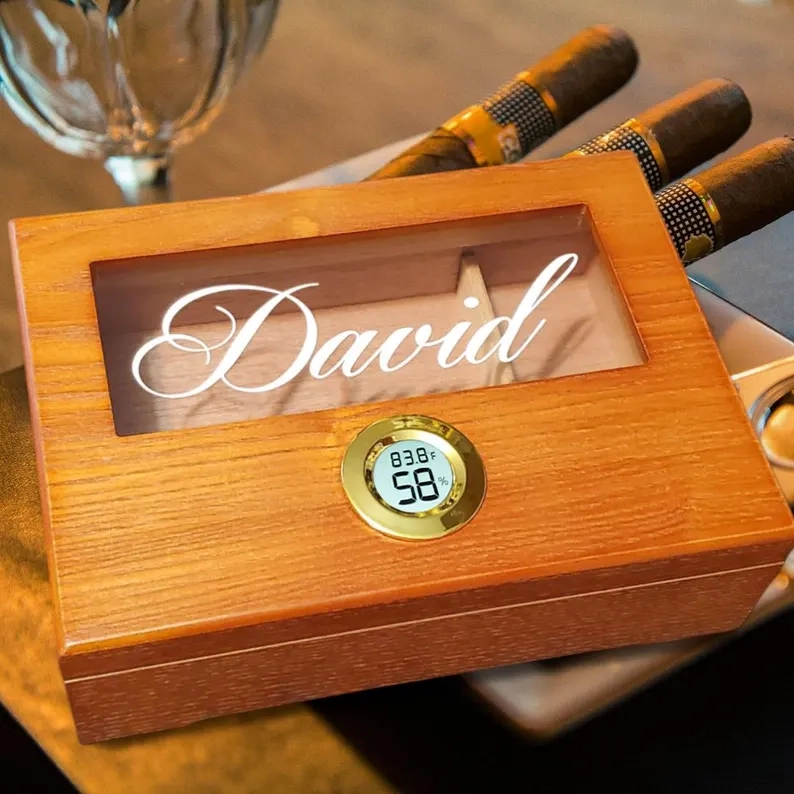
Personalized Cedar Cigar Humidor — glass top, hygrometer, engraved with his name
How to organize belts: FAQ
What is the best way to organize belts?
Hang them, one per hook, by the buckle, on a hanger or a row of hooks. Hanging keeps leather flat and every belt visible.
Is it bad to roll leather belts?
Loosely rolled for travel or a short time, no. Rolled tight for years, yes: a dress belt takes a permanent curl. Roll casual and woven belts; hang dress belts.
Should you hang a belt by the buckle or the tip?
By the buckle. It is the heavier, stiffer end, and hanging by the tip stretches the thin end and the last holes.
Can you hang belts and ties on the same hanger?
Yes. A hanger with twenty hooks takes both; put the belts on the hooks nearest the centre so the weight sits close to the rail.
How do you store belts without a closet?
Roll casual belts loosely in a divided drawer, hang dress belts on hooks on the back of a door that is rarely opened, and keep the daily belt on a valet tray.
How many belts should a man own?
Four covers almost everything: black dress, brown dress, a casual leather belt for jeans, and a woven belt for summer.
Engraved tie & belt hangers, made to order
Every tie and belt hanger at Gozi360 is laser engraved to order — a name, initials, “Dad” and the year, or a logo. For a groomsmen set or a client list, send the names and we will price the batch.
