

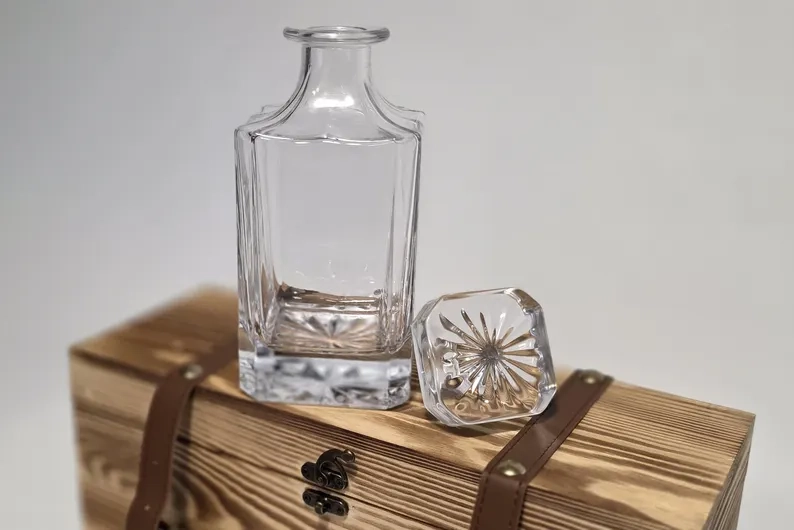
Whiskey Decanter: 6 Honest Answers Before You Buy One Leave a comment
Short answer: a whiskey decanter is a sealed glass vessel that holds whiskey after the bottle is opened. It exists to store and display the spirit — not to improve it. Unlike wine, whiskey is already finished in the barrel, so a whiskey decanter will not soften or age it.
What a whiskey decanter actually does
A whiskey decanter does two jobs, and it is worth being clear about both because most product listings blur them together.
It stores. A good stopper limits how much air reaches the spirit, which slows oxidation once the original bottle is open. That matters more than people think: an opened bottle sitting at half level loses noticeable character over a year or two.
It displays. This is the honest reason most people buy one. A whiskey decanter on a shelf or a bar cart looks deliberate in a way a supermarket bottle with a paper label does not. There is nothing wrong with that being the main reason.
What a whiskey decanter does not do is change the whiskey. Which brings us to the question people ask most.
Does a whiskey decanter improve the taste?
No, and anyone telling you otherwise is selling something.
Decanting wine works because young red wine still contains compounds that soften with air exposure over an hour or two. Whiskey has already spent years in oak. It is finished. Pouring it into a whiskey decanter exposes it to air, and over months that exposure slowly flattens the spirit rather than opening it up.
So the correct expectation is this: your whiskey tastes the same on day one, and slightly duller after a year in a poorly sealed decanter. Use one because you like how it looks and because it protects an opened bottle better than a loose cork — not because it will make a mid-shelf bourbon taste top-shelf.
How long does whiskey last in a whiskey decanter?
With a well-fitted airtight stopper, and kept out of direct sunlight, whiskey holds its character for roughly six months to a year. After that it does not spoil or become unsafe — it simply loses aroma and edge.
Three things decide how fast that happens:
- How well the stopper seals. A ground-glass stopper that sits flush is doing real work. A loose decorative one is not.
- How full it is. A whiskey decanter that is a quarter full has far more air touching the spirit than a full one, and dulls several times faster.
- Light and heat. Sunlight on a shelf will flatten whiskey faster than air will. Keep it away from a window and away from a radiator.
Practical rule: decant what you will realistically drink within a few months. If a bottle is precious and you open it twice a year, leave it in the bottle.
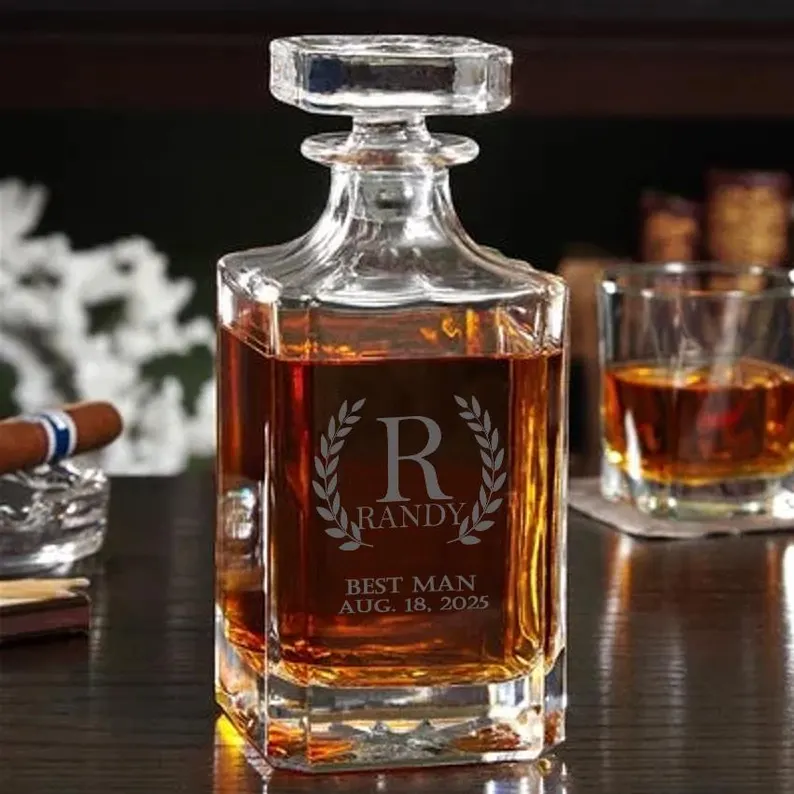
Engraved whiskey decanter — 750ml, clear glass
Airtight stopper, one standard bottle fits it exactly, and a name, date or monogram cut into the glass. No lead, because it is glass rather than crystal.
How to use a whiskey decanter
- Rinse and dry it completely. Water left inside will dilute the first pour and can leave a cloudy film.
- Pour slowly against the inside wall. Whiskey does not need aeration, and a slow pour avoids splashing and foam.
- Fill it most of the way. Less headspace means less air. Most decanters hold 750ml precisely so one bottle fills one decanter.
- Seat the stopper firmly, keep it out of the sun. That is the whole ritual.
One thing worth saying: do not treat a whiskey decanter as long-term storage for something you are saving. It is a serving vessel, not a cellar.
How to clean a whiskey decanter
The narrow neck is the problem — a brush will not reach the shoulders, and dishwasher heat can etch or crack the glass. Do it by hand:
- Warm water and a drop of unscented dish soap. Swirl and pour out. Scented soap leaves a residue you will taste.
- For film or staining, add uncooked rice. A handful of dry rice with warm water, swirled firmly for a minute, scrubs the inside walls without scratching. Then rinse thoroughly.
- Rinse twice more with clean warm water. Any soap left behind will ruin the next pour.
- Dry upside down at an angle. Prop it over a drying rack or in a bowl so air moves through the neck. Standing it upright traps moisture and creates the cloudy haze people mistake for permanent damage.
Never put a decanter in the dishwasher, and never leave the stopper in while it dries.
Crystal or glass: the lead question nobody asks
Traditional cut crystal contains lead oxide, which is what gives it weight and sparkle. Lead can leach into spirits stored in it, and the longer the whiskey sits the more leaches. For a decanter used and refilled within months the risk is small, but it is a real reason many people now choose plain glass.
Our own engraved whiskey decanter is premium clear glass, not crystal. It is lighter than cut crystal and it does not have that leaded sparkle — and it also has no lead in it. If crystal weight matters more to you, buy crystal from someone who states the lead content, and do not store whiskey in it for years.
The FDA guidance on lead in foodware is worth two minutes if you own an inherited crystal set.
What size whiskey decanter to buy
750ml is the answer for almost everyone, because that is a standard bottle. A whiskey decanter smaller than that leaves an awkward remainder in the bottle; a larger one sits half empty, which is exactly the condition that dulls the spirit fastest.
If you are buying a decanter set with glasses, check the glass capacity too. An 11 oz rocks glass is the practical size — enough room for a large ice cube without the pour looking lost.
When a whiskey decanter is the wrong gift
Two cases, and it is worth being straight about them.
If they collect rare bottles. Serious collectors keep whiskey in the original bottle with the original label, because the label is part of the object. A decanter removes that. Buy them engraved whiskey glasses instead — the same personal touch without asking them to pour away a label.
If they drink one bottle a year. A whiskey decanter sitting a quarter full for eighteen months is working against the whiskey. Again, glasses are the better gift.
Where a whiskey decanter is right: weddings, retirements, a promotion, a milestone birthday, or groomsmen gifts where a name and a date on the glass is the whole point. It is a display piece with a use, and that is a good category of present.
Whiskey decanter FAQ
What does a whiskey decanter do?
It stores opened whiskey in a sealed glass vessel and displays it. It does not age, soften or improve the spirit — whiskey is already finished when it leaves the barrel.
How long can whiskey stay in a decanter?
Six months to a year with a good airtight stopper and no direct sunlight. It stays safe to drink far longer than that, but the aroma flattens.
Why use a decanter for whiskey at all?
Two honest reasons: a proper stopper protects an opened bottle better than a loose cork, and it looks considerably better on a shelf than the original bottle.
How do you clean a whiskey decanter?
Warm water, a drop of unscented soap, and uncooked rice swirled inside for stubborn film. Rinse twice and dry upside down at an angle. Never use a dishwasher.
Is a crystal whiskey decanter safe?
For short-term use, generally yes. Traditional cut crystal contains lead that can leach during long storage, which is why plain glass is the safer choice for anything you keep filled.
What size whiskey decanter should I buy?
750ml, so one standard bottle fills it exactly. Anything larger sits half empty and the whiskey dulls faster.
Engraved whiskey decanters, made to order
If you want a whiskey decanter with a name, a date or a monogram cut into the glass, we engrave every piece to order — one, or two hundred for a company.
